简介:
Hole-y Phobia May Have Evolutionary Origins
密集恐惧症是生存本能?
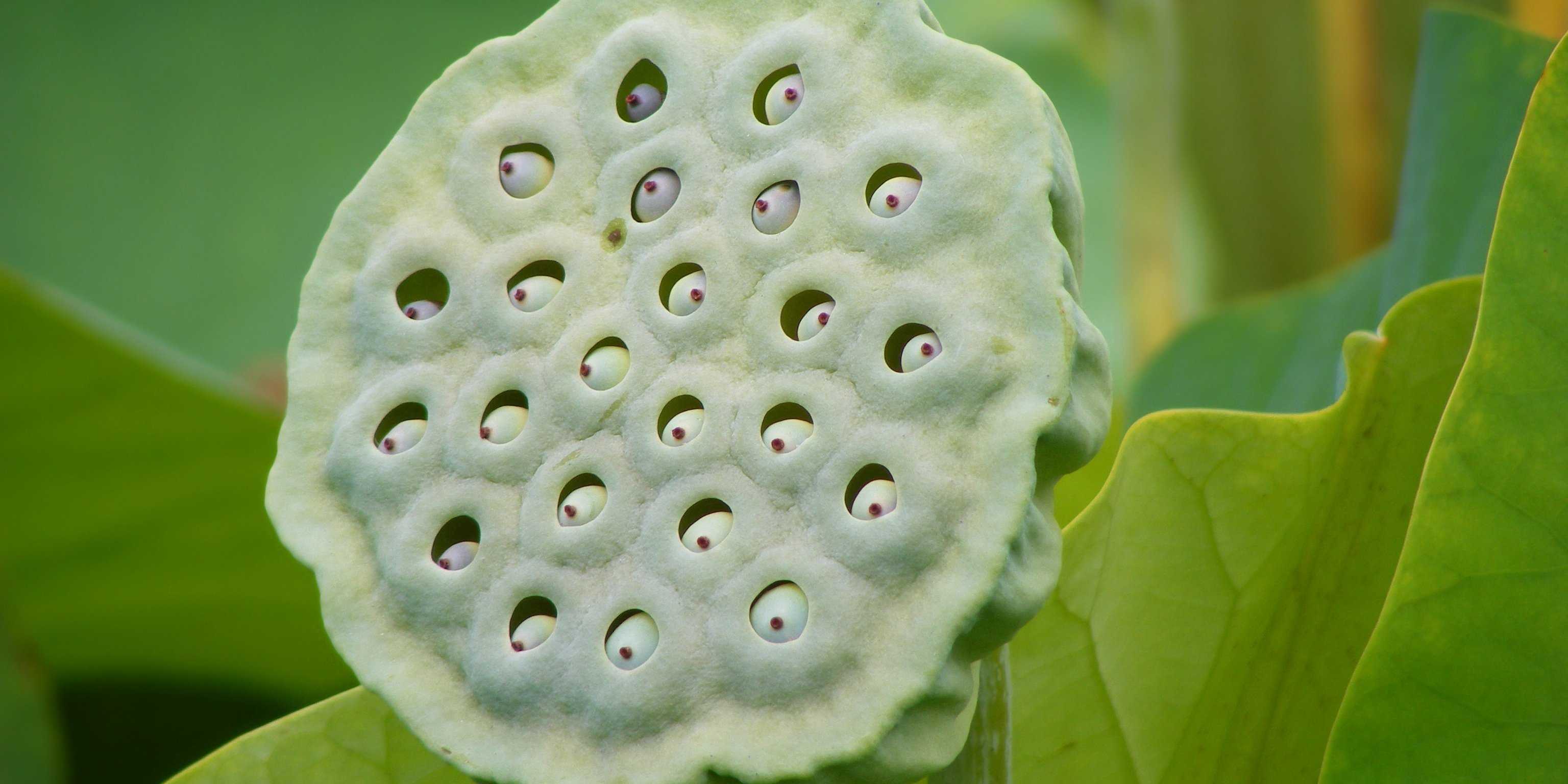
Images that induce trypophobia, the fear of holes, share visual features with images of certain venomous animals, implying that the aversion has an evolutionary basis. Allie Wilkinson reports
引发密集恐惧症的图片与有毒动物的图片具有相似的视觉特征,说明这种恐惧可能具有演化上的根源。艾利•威尔金森报道。
撰文/播音 艾利•威尔金森(Allie Wilkinson)
翻译 程孙雪子
If the sight of Swiss cheese makes you melt or the thought of a honeycomb gets you buzzing, you may suffer from trypophobia, the most common phobia that you've probably never heard of. Trypophobia is the fear of holes. People with the phobia experience panic attacks, increased heart rate and hot sweats when they see clusters of holes.
如果瑞士干酪上的孔能把你恶心得浑身发软,光想到蜂巢的样子你都会觉得耳朵边在嗡嗡作响,你很可能患有密集恐惧症。密集恐惧症是最常见的第一种恐惧症,患者在看到一堆密集的小洞时会出现恐慌、心跳加快、浑身出汗等症状。
A visual scientist who suffers from trypophobia decided to investigate the phenomenon with his colleague. They performed spectral analysis on images that induce trypophobia and found that the fear-inducing images all had similar characteristics related to luminescence, contrast and light wavelengths. But they didn’t know why these features caused such an adverse reaction.
一位患有密集恐惧症的视觉研究专家决定和同事们一起研究一下这种现象。他们对引起密集恐惧症发作的图像进行了光谱分析,发现这些图像在发光、对比度以及光波波长方面都有着相似的特征。但他们并不知道,为何这样的光学特点会引发如此令人不快的效应。
A study participant mentioned that certain animals also induced his phobia. So the researchers analyzed pictures of poisonous animals.
研究的一位参与者提到,一些动物也会诱发他的恐惧症。因此,研究者们又分析了一些有毒动物的图片。
They discovered that the trypophobia-inducing images and those of poisonous animals shared the same visual features, suggesting the fear may be an evolutionary survival response. The study is in the journal Psychological Science. [Geoff G Cole and Arnold J Wilkins, Fear of holes]
他们发现,引发密集恐惧症的图片与有毒动物的图片具有相同的视觉特征。这暗示,这种恐惧可能是一种在进化过程中保留下来的生存本能。该研究发表在《心理科学》杂志(Psychological Science)上。
So if an english muffin induces a panic attack, your brain may just be saying better safe than sorry.
如果一块英国松饼就能把你吓坏,那很可能是大脑在提醒你——小心驶得万年船。
(题图来源:http://imgkid.com/)